
The Diencephalon
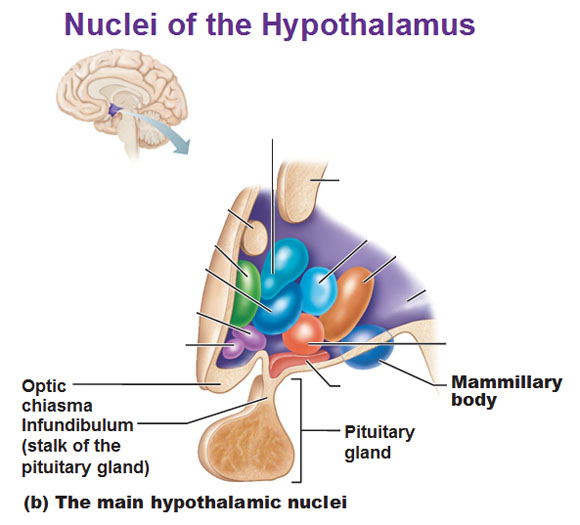
Very deep inside the brain, surrounded by the cerebral hemispheres is where we find the diencephalon. This structure surrounds the third ventricle and is primarily made of brain nuclei (gray matter).
It is composed of three paired structures:
Thalamus – 2 egg-shaped structures, you can only see one side in the pic below.
Hypothalamus – oddly shaped, below the thalamus, in the dark blue.
Epithalamus – posteroinferior to thalamus and is mostly the single pineal gland
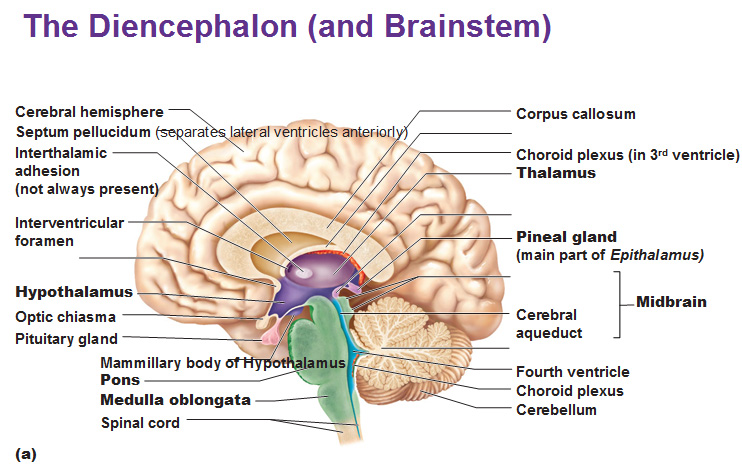
The Thalamus in detail
There’s a dozen nuclei on each side. It’s a relay station for everything sensory that comes from the brain. It includes tons of synapses. The thalamus sends the signal outward. What happens here is a lot of “editing” (processing, amplifying, toning down) before it goes to the cerebral cortex. It is literally the gateway to the cerebral cortex.
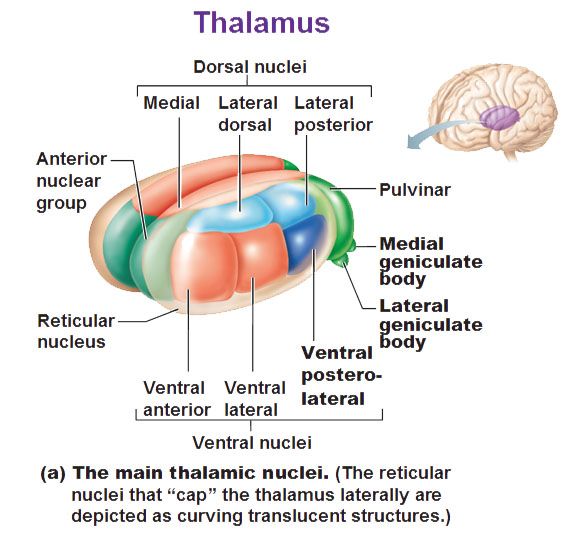
The hypothalamus in detail
This is known as the “master gland” which controls/masters all the other glands. The mammillary body can be seen with the naked eye. The hypothalamus controls the autonomic nervous system, emotions (it’s right at the center of the Limbic system), thermostat, hunger/thirst, pleasure, circadian rhythm, entire endocrine system and memory via input from the hippocampus. The pituitary gland is held by a stalk called the infundibulum.
The epithalamus in detail
The epithalamus forms part of the roof of the 3rd ventricle. The pineal gland is the main part of the epithalamus and it secretes melatonin that induces sleep and has to do with circadian rhythm. It also induces puberty/labor and this is the area associated with the “third eye” according to chakra/energy systems.
Use this Table of Contents to go to the next article
YOU ARE HERE AT THE CNS
Let’s Connect
The best way to stay up to date with the latest content and videos is to sign up for my newsletter!
Read This Next

Level Up Your Understanding of Shoulder Mechanics!

Cancer Chemotherapy Fact
How come people from very cold climates can visit LA in the winter and walk around in shirts and shorts?